How much has the clothing rental market grown?
Explore the growth outlook for online clothing rental, real business results from India, the US and Japan, and what rental stores need to grow next.
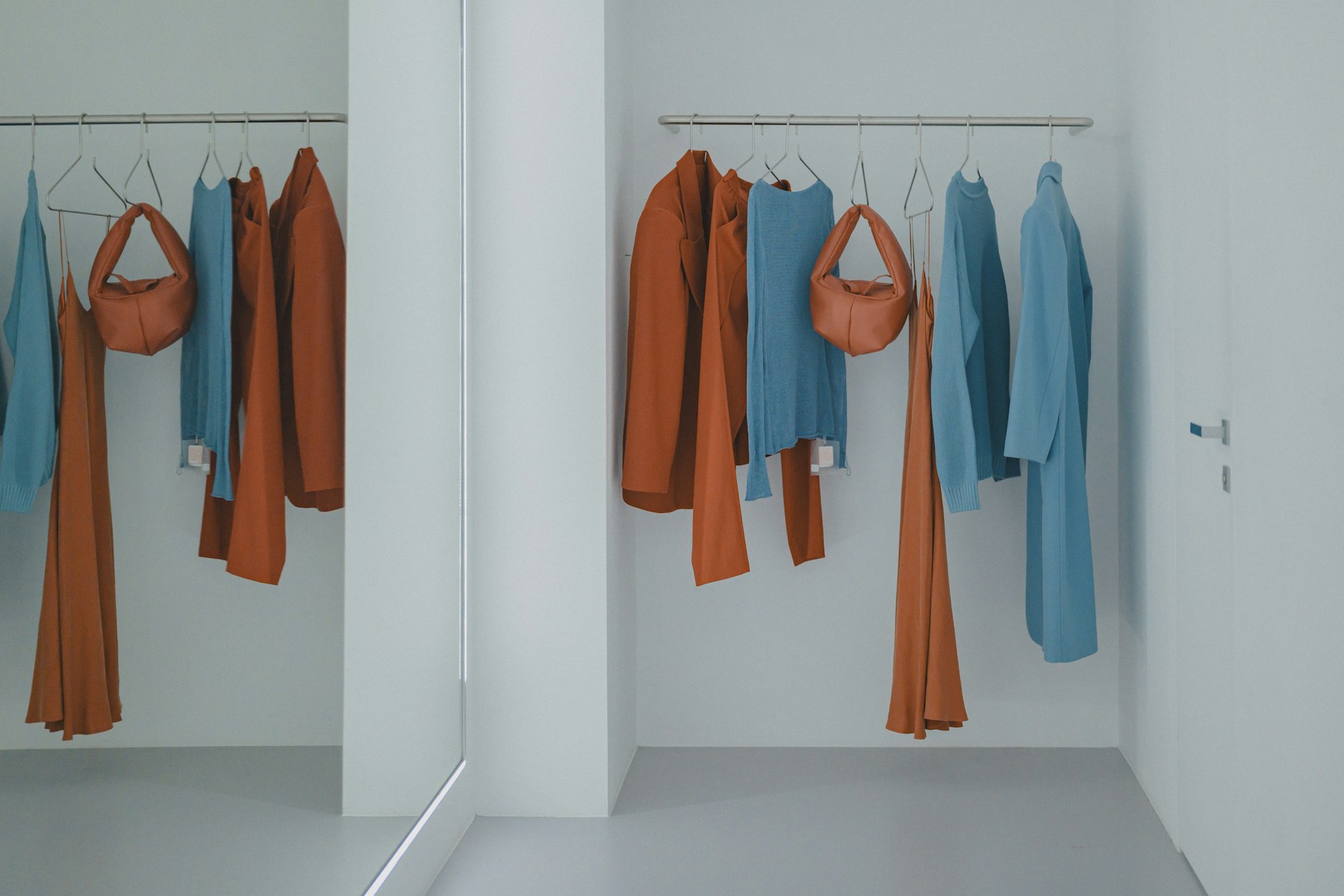
If you need a dress for a wedding, do you really have to buy a new one every time? What if you want to change up your work wardrobe regularly? Questions like these have given rise to clothing rental services that let people wear clothes when they need them, without owning them.
Renting wedding dresses or suits for special occasions used to be familiar territory. Now businesses have emerged that rent everyday clothing through subscriptions. How much has the market actually grown?
1. The online clothing rental market is approaching USD 3 billion by 2030
Market research firm The Business Research Company estimated the global online clothing rental market at USD 1.91 billion in 2025. It projects USD 2.11 billion in 2026 and USD 3.15 billion in 2030, about 65% higher than in 2025.
| Year | Market size (USD) | Status |
|---|---|---|
| 2025 | 1.91 billion | Estimate |
| 2026 | 2.11 billion | Forecast |
| 2030 | 3.15 billion | Forecast |
Source: The Business Research Company, Online Clothing Rental Market Report 2026
However, research firms differ in their coverage and estimation methods. A separate report by Grand View Research projected growth from USD 1.12 billion in 2021 to USD 2.33 billion in 2030, at a forecast compound annual growth rate of 8.5%. Figures from the two reports cannot simply be combined to calculate actual annual growth rates.
Source: Grand View Research, Online Clothing Rental Market 2022–2030
Both reports point to potential expansion in online clothing rental. These are not comprehensive sales figures for offline rental stores, nor do they guarantee future performance. Company disclosures offer a clearer view of whether more customers are actually renting clothing.
2. Clothing rental companies that have grown
Rent An Attire in India: From 30 to more than 1,500 garments
Started in Pune, India, in 2015, Rent An Attire offers designer outfits for weddings and parties. In a 2018 interview with Hindustan Times, founder Laveena Laitonjam said the business initially had 30 garments available for rental. Within approximately three years, that number had increased to more than 1,500, over 50 times the initial inventory. She also reported that at least 100 outfits were being rented each month at the time.
Source: Hindustan Times, founder interview, December 1, 2018
As checked in November 2026, the official store directory lists locations in Pune and Dehradun, and online rental is also available. The company also runs a program through which customers can consign their own outfits and receive 30% of the net profit. The company handles bookings, cleaning and maintenance on their behalf.
Recent annual revenue and rental-volume trends could not be verified. The 50-fold figure refers to the expansion of garments available for rent during the company's early years, not current revenue growth. Nevertheless, it is a notable example of repeated occasionwear use becoming an established business model.
Source: Rent An Attire official store directory · Garment consignment program
Rent the Runway in the US: Growing customer numbers and profitability challenges
Rent the Runway is a prominent service that allows customers to subscribe to or rent designer clothing for a specific period. At the end of fiscal 2025, which closed in January 2026, it had 143,796 active subscribers, up 20.1% year over year. Total annual revenue increased 7.7% to USD 329.8 million.
In the quarter ended July 2026, revenue increased 20.8% year over year to USD 97.7 million. However, the company recorded a net loss of USD 12.9 million in that quarter. Even as revenue rises, acquiring, delivering, collecting and maintaining clothing carries costs.
Source: Rent the Runway fiscal 2025 results · Fiscal 2026 second-quarter results (US Securities and Exchange Commission)
airCloset in Japan: Clothing subscriptions take root in Asia
Japan's airCloset operates a service in which stylists select and deliver clothes based on customers' preferences. According to a summary of disclosures for the fiscal year ended June 2026, revenue in the airCloset business segment rose 4.2% year over year to 4.563 billion Japanese yen. However, the number of monthly paying members fell to 35,710 at year-end, and the segment recorded an operating loss.
This example shows that demand for clothing subscriptions is not limited to the US, while underscoring the importance of continually attracting and retaining customers.
Source: Summary of airCloset's financial results presentation for the fiscal year ended June 2026
3. Why do people rent instead of buying clothes?
The benefit of renting is not simply a lower price. Its value depends on why the customer wants the clothing.
- Special occasions: Customers can find clothing for a specific date, such as weddings, graduation photos or events.
- New styles: Customers can experiment with colors or designs they might hesitate to buy.
- Everyday subscriptions: Customers can experience different styles without continually adding clothes to their wardrobes.
In South Korea, garments such as hanbok, school uniforms, suits and wedding attire are also rented for specific dates. Growth rates for overseas subscription models cannot simply be applied to this market, but customers share a desire to access clothing when they need it. For an outfit needed on a particular day, availability and how well it suits the wearer may matter more than whether to purchase it.
4. Why is growth challenging for rental businesses?
A conventional clothing store completes a transaction when it sells a garment. A rental business must offer the same garment repeatedly to different customers. Managing inventory efficiently is therefore as important as increasing revenue.
Consider a dress rented for an event that turns out not to fit. The customer may need to find another outfit urgently, rather than simply experiencing an inconvenience. The rental business may need to spend time on exchange shipments and customer support, while return and cleaning schedules could affect the next booking.
Rental stores should consider tracking these metrics together.
| Metric | What to measure |
|---|---|
| Booking conversion rate | Share of product viewers who complete a booking |
| Inventory utilization | Share of available rental time that inventory is actually rented |
| Fit-related exchange and cancellation rate | Share of bookings changed or canceled due to sizing or style issues |
| Repeat booking rate | Share of first-time customers who rent again |
| Contribution margin per booking | Rental revenue minus variable costs such as shipping and cleaning |
Improvement in one metric does not necessarily mean the business as a whole has improved. If booking conversion rises but size-related exchanges and support costs rise too, profitability may deteriorate.
5. What if customers could try on clothes before booking?
Online, customers can see how a garment looks on a model, but it is harder to tell how it might look on them. For rental services, this uncertainty matters even more. If an event is scheduled for a specific date, there may not be enough time to choose a different garment after delivery.
SilkCave helps online shoppers visualize garments on their own photos and make more informed style and size choices. Rental stores could use this to let customers compare different outfits before making a reservation.
AI virtual try-on cannot guarantee the stretch of the actual fabric or how the clothing will feel. It should be offered alongside measurements, rental availability and exchange policies. To evaluate its effect, stores should compare booking conversion, exchange and repeat booking rates based on virtual try-on usage.
Conclusion
Clothing rental is no longer limited to one-off occasionwear. In India, designer occasionwear rental has become an established business model, while everyday clothing subscriptions operate in the US and Japan. Research firms also expect the online clothing rental market to expand.
However, market growth and individual profitability are different things. The next opportunity for rental stores lies not only in acquiring more garments, but also in helping customers confidently book outfits that suit them.
Cover photo: Egor Myznik / Unsplash
See it on your store's product page
Enter a product page address and see it with Silk Cave on it right away.
Related reading
 Why does AI change body shape when you only change a shirt’s color?
Two experiments show how editing clothes can change the person wearing them. SilkCave uses the shopper’s photo and garment measurements to place the cuffs, then checks for changes in body shape.
 10 Ways to Reduce Returns at an Online Clothing Store
From garment measurements and fit reviews to packing and delivery, learn which changes have research behind them and how to test their effect on returns at your store.
 8 AI Virtual Try-On Tools Compared for 2027
Compare eight AI virtual try-on tools for fashion stores, from storefront apps to 3D fitting rooms and developer APIs, with features, pricing, setup requirements, and use cases.